How to Build an MVP Without Wasting Money
Building an MVP does not mean building a cheap product. It means building the smallest strategic version of your product that can validate the business idea, serve real users, and reduce unnecessary development cost.
Introduction
Building an MVP does not mean building a cheap product. It means building the smallest strategic version of your product that can validate the business idea, serve real users, and reduce unnecessary development cost. This guide is written for founders, startups, and growing businesses that want to build digital products with clarity instead of guesswork.
What Is an MVP?
An MVP, or Minimum Viable Product, is the first practical version of a product that delivers the core value to users. It is not a half-built product. It is a focused product designed to validate demand before you invest in advanced features.
Why Startups Waste Money on MVP Development
Startups waste money when they start development without clear scope, product architecture, user flows, or feature priority. The most expensive mistake is not the development rate. It is building the wrong things first.
- Building too many features
- Changing requirements during development
- No clear database structure
- No product roadmap
- Weak validation before build
Step 1: Define the Core User Problem
Before building anything, define the painful problem your product solves. A strong MVP starts with one specific user group and one specific problem. If the problem is vague, the product will become vague.
- Who has this problem?
- How are they solving it now?
- What is frustrating about the current solution?
- Why would they switch to your product?
Step 2: Identify the Core Action
Every successful MVP has a core action. This is the main action users take to receive value. For a marketplace, it may be posting or booking. For a CRM, it may be adding and tracking leads. For a coaching platform, it may be creating sessions and monitoring progress.
Step 3: Separate Must-Have Features From Nice-to-Have Features
| Must-Have | Nice-to-Have |
|---|---|
| Signup, login, core dashboard, main workflow, admin panel, payment if required | Advanced analytics, gamification, complex filters, mobile app, AI recommendations |
Step 4: Create Product Architecture Before Development
Product architecture defines user roles, database structure, permissions, workflows, APIs, automations, and scalability logic. Without this foundation, your MVP may work in the beginning but become difficult to improve later.
Step 5: Build in Phases
Do not build the full vision immediately. Build Phase 1 to test the core value, Phase 2 to improve based on feedback, Phase 3 to monetize better, and Phase 4 to scale.
Step 6: Use No-Code Strategically
Bubble.io is powerful for MVPs because founders can build web applications faster, test business logic, integrate APIs, and iterate quickly. The key is not only using Bubble, but architecting Bubble properly.
MVP Cost Saving Checklist
- Write a Product Requirement Document before build
- Limit the first release to core workflows
- Use reusable design components
- Keep the database simple but scalable
- Validate payment willingness early
- Track user behavior after launch
Need Help Turning This Into a Buildable Product?
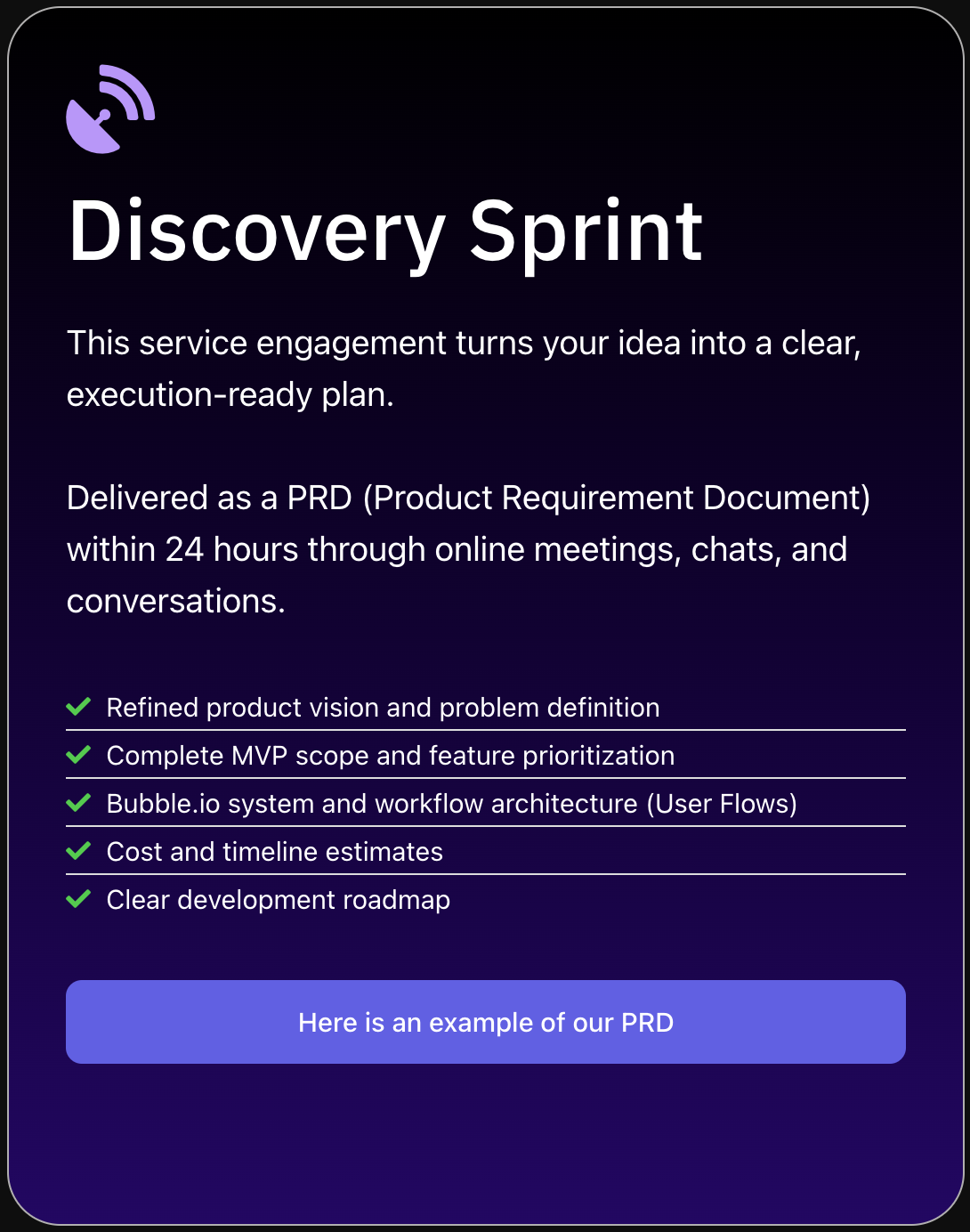
Simple Automation Solutions helps founders create product requirements, user flows, technical architecture, development timelines, and scalable Bubble.io systems through a focused Discovery Sprint.
FAQs
How much should a startup spend on an MVP?
The right MVP budget depends on complexity, but the goal should be to spend enough to validate the idea without overbuilding the full product.
What is the biggest MVP mistake?
The biggest mistake is building too many features before proving that users want the core solution.
Can Bubble.io be used for MVP development?
Yes. Bubble.io is a strong platform for MVP development when the product architecture, database, workflows, and scalability are planned properly.
What should an MVP include?
An MVP should include the core user journey, essential features, basic admin controls, and the minimum workflows required to solve the main problem.
When should I build more features?
Build more features after real users validate the core product and you have evidence from feedback, usage, or payments.